El Niño: Now is the time to get Flood Ready
The Met Office has warned that the exceptionally strong El Niño developing this year could increase the chances of wetter and stormier conditions across the UK during the autumn and early winter.

Rainfall is increasing; there’s no doubt about that. As our world heats up, the atmosphere holds more moisture, clouds move slower and therefore storms are becoming more intense. We often hear reports that ‘a month’s rain fell in a matter of hours’. This overwhelms our drainage system, which was not built for today’s climate or indeed the number of houses we now have feeding into it. In fact, generally speaking, our drainage system was designed to take away both rain and sewage in one pipe.
The threat that climate change brings promises us that things will get worse. Right now, the climate we are experiencing is the least extreme it will be: rainfall is becoming more intense and associated surface water flooding is increasing. I believe, without realising it, we are all unwittingly contributing to the problem.
Over the years, with an increased need for off-road parking spaces, many of us have paved over our front gardens. In London alone, the equivalent of around 5,200 football pitches has been paved over so, when that rain falls, it hits the ground running, overwhelms the drains, increases the chances of flooding, and sends sewage overflow into our rivers.
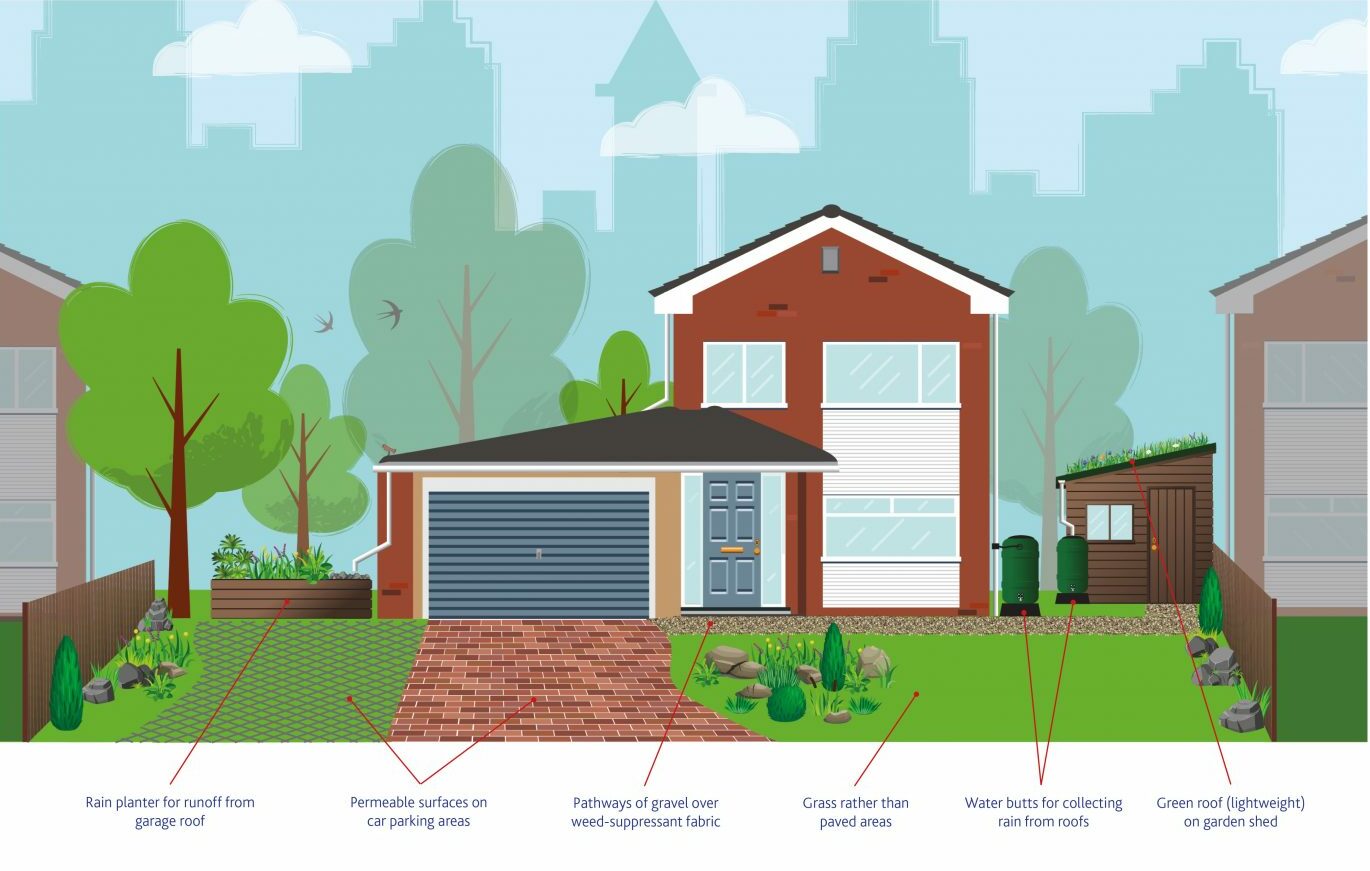
One of my mantras has been that we should work with nature and not against it. So, what can we do at our homes to reduce the amount of water we send to the drainage system?
Every drop of rain that we can slow down, store or soak into the ground at home is one less drop rushing into an already overloaded drainage system. On their own, these actions may seem small but together they can play a role in reducing flood risk while also helping our rivers.
If you’re looking for inspiration, Flood Re won a gold medal at the Chelsea Flower Show for creating the most beautiful rain garden, in a very small space. It showed that even if you have a tiny garden, you can make a difference too! https://www.rhs.org.uk/shows-events/rhs-chelsea-flower-show/gardens/2026/flood-re.
For more information visit www.floodmary.com
Copyright: Mary Long-Dhonau, July 2026