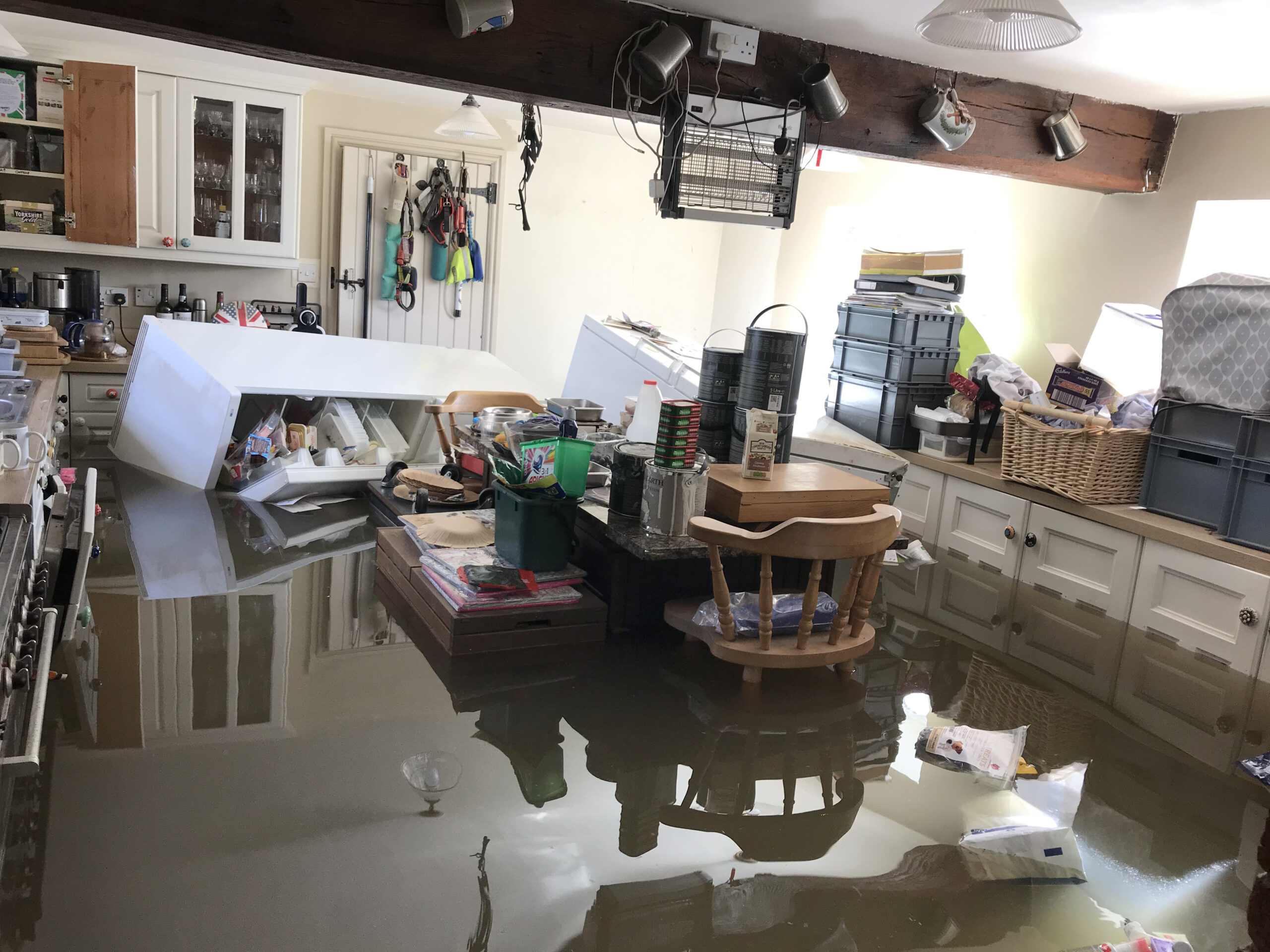
Of course, nobody can say exactly what this winter will bring, however if you know you are at risk of flooding, now is the time to plan ahead and do what you can to reduce the awful impact a flood can bring with it.
1. Stay Informed
Sign up for free flood warnings: If you’re at risk of river flooding, make sure you have signed-up for free Environment Agency flood warnings. This early warning allows you valuable time to act quickly when a flood is expected. Sign up here: https://www.gov.uk/sign-up-for-flood-warnings.
Monitor weather reports: If you are at risk of surface water flooding, sign-up for the Met Office Severe Weather Warnings, particularly when heavy or prolonged rainfall is forecast: https://weather.metoffice.gov.uk/warnings-and-advice/uk-warnings#?=&date=2026-08-24
2. Prepare a Flood Plan and a ‘to do’ list:
Having a well-thought-out flood plan or ‘flood to do list’ is essential. It helps you act quickly when time is of the essence. When a flood warning comes, your mind can turn to spaghetti so having a plan to hand will help you stay focussed.
I’ve created my own Household Flood to Do List template, which can be found here: https://floodmary.com/wp-content/uploads/2025/12/Household-flood-to-do-list-2026_download.pdf.
Also;
Prioritise what you need to move: Decide in advance which belongings you would want to move out of harm’s way first. Don’t forget about your car – you don’t want to deal with both a flooded house and a flooded vehicle!
Identify storage locations: Move precious belongings upstairs or into an elevated place. If you live in a bungalow or have limited upstairs space, speak to friends or relatives in advance about whether they could look after your most sentimental and valuable possessions during a flood threat. Put these details in your flood plan.
Gather supplies: Keep a collection of lidded plastic boxes ready for storing and transporting items to safer locations. Where possible, start storing important or sentimental possessions on higher shelves or on top of wardrobes now.
3. Better Protecting Your Home
Now is the time to look around the outside of your home and check the condition of your mortar and brickwork. There are water-resistant mortars and breathable water-repellent treatments available which may help slow the ingress of water through external walls. You’ll find examples in my Making Your Home Flood Ready Directory. https://floodmary.com/attention-introducing-the-new-property-flood-resilience-pfr-directory/
Remember that treatments need to be suitable for the construction of your property, particularly if you have an older or historic home.
The following isn’t an exhaustive list, but it will hopefully get you thinking about what might need to be better protected before a flood.
Airbricks
An awful lot of water can enter your home via the airbricks – in fact it is often the first place flood water can enter into a home.
There are a number of certified Airbrick covers in my Directory but in an emergency you can create a temporary seal using aluminium tape.
Cover any airbricks with wide aluminium tape as this will help to prevent against water ingress. One large roll can cover many airbricks and can be purchased online or in DIY shops.
External Doors
Certified Flood Doors and Flood Barrier are always recommended, where they are suitable for your property. Again, there are details on specialist installers in my Flood Directory.
If your budget doesn’t stretch to flood doors or barriers, there are some temporary measures you can prepare in advance. They won’t offer the same level of resilience as properly tested and certified products but they may help to slow water entering your home or speed up the recovery process:
- Waterproof or flood tape: apply around external doors and along the bottom to help slow water ingress. If water starts to leak through, don’t immediately pull the tape off; it may still be holding back a significant amount of water.
- Plastic sheeting: a large piece of strong plastic can be fixed over a doorway using waterproof tape and weighted down at the bottom.
- Temporary wooden barriers: a piece of wood cut to fit a doorway can provide another temporary measure. It will need to be prepared in advance and properly sealed when used.
Whatever you decide to use, prepare it before you need it and write down where everything is stored in your flood plan. You don’t want to be hunting around the garage for it when the water is already rising.
Absorbent Cushions
Invest in Flood Sax: If you can, purchase some large absorbent flood cushions or ‘flood sax’, essentially oversized baby nappies! They can soak up any water that seeps through doors, as well as the clean-up afterwards. Each can absorb around 20 litres of water so are very useful.
Drains and Toilets
Floodwater can also enter a property through drains and toilets. Consider having a non-return valve fitted to your drains to help prevent water backing up into your home.
There are also purpose-made toilet bungs available or, in an emergency, put a deflated football as far as you can down the toilet or a rolled-up Flood Sax, to help limit ingress.
Make sure you know what you have, how to use it and where it is stored before a flood happens.
4. Protect Your Furniture and Belongings
There are lots of simple things you can do to reduce the amount of damage if water does get into your home.
Get curtains off the floor: Tie them up – a scarf or an old pair of tights works perfectly well!
Raise furniture and belongings:
- Put large wellington boots, sturdy plastic buckets or bins under the legs of kitchen or dining tables and use the table tops to store the contents of cupboards, preferably in lidded plastic boxes.
- Decorating trestle tables can be used to raise sofas, with chairs and other belongings placed on top.
- Put sentimental and irreplaceable belongings into lidded plastic boxes and move them upstairs or somewhere safe.
- Bricks wrapped in strong plastic bags can be used to raise some pieces of furniture. For lighter items, sturdy plastic bins may also work.
- If you are on your own and need to raise heavy furniture, a strong plank can sometimes help you lift one end at a time – but never put yourself at risk trying to move something that’s too heavy!
- Gather the things you’ll need in advance and keep them together in a designated Flood Box.
5. Pack a Grab Bag
Put together a ‘grab bag’ containing the things you and your family would need if you had to leave your home quickly.
Every family’s bag will be different but think about medication, important documents such as insurance policy information, passports and similar, phone chargers, spare clothing, toiletries, children’s essentials and anything your pets might need.
There are many more suggestions in my handy Household Flood To Do List.
6. Check your insurance
Check that your household insurance policy covers you for flooding. If you are at high-risk, check if the flood risk element of your insurance has been passed (ceded) to Flood Re.
We are very lucky in this country to have Flood Re, which was created by the Government and the insurance industry to help make home insurance more affordable for people living in areas at high risk of flooding. There are eligibility criteria including around when your home was built (pre-2009) and how it is occupied, so if you’re unsure whether your policy is covered by Flood Re, do speak to your insurer.
If your insurer offers it and your claim is eligible, this can provide up to £10,000 towards the cost of installing flood resilience measures over and above the cost of repairing flood damage. If you are unsure if your insurer offers this, do give them a ring! It’s generally referred to as ‘Build Back Better’.
A little preparation can make a huge difference
While all this may sound like an awful lot of hard work, believe me that it is time and effort well spent.
On average, people are out of their homes for around nine months after being flooded and managing a large flood insurance claim, while also dealing with the emotional impact of what has happened, can be incredibly stressful.
Taking steps now to think about how you can reduce the amount of floodwater entering your home can make a big difference. Don’t wait until the rain starts falling; use the time you have now to get flood ready.
Stay safe and be prepared for whatever El Niño may bring!
Click here for a helpful Flood Preparedness top tips video:
https://youtu.be/gika1cf1zRU?si=6UeEKp3OfvlVGwSJ
Copyright: Mary Long-Dhonau, August 2026